A synthetic audience reads your message before the public does.
Anxiety is our narrative simulation engine: synthetic agents reading, reacting, sharing and arguing across six platforms. Marketing teams use it to rehearse campaigns. Comms teams use it to pressure-test announcements. Political shops use it to see the counter-narrative before it writes itself.
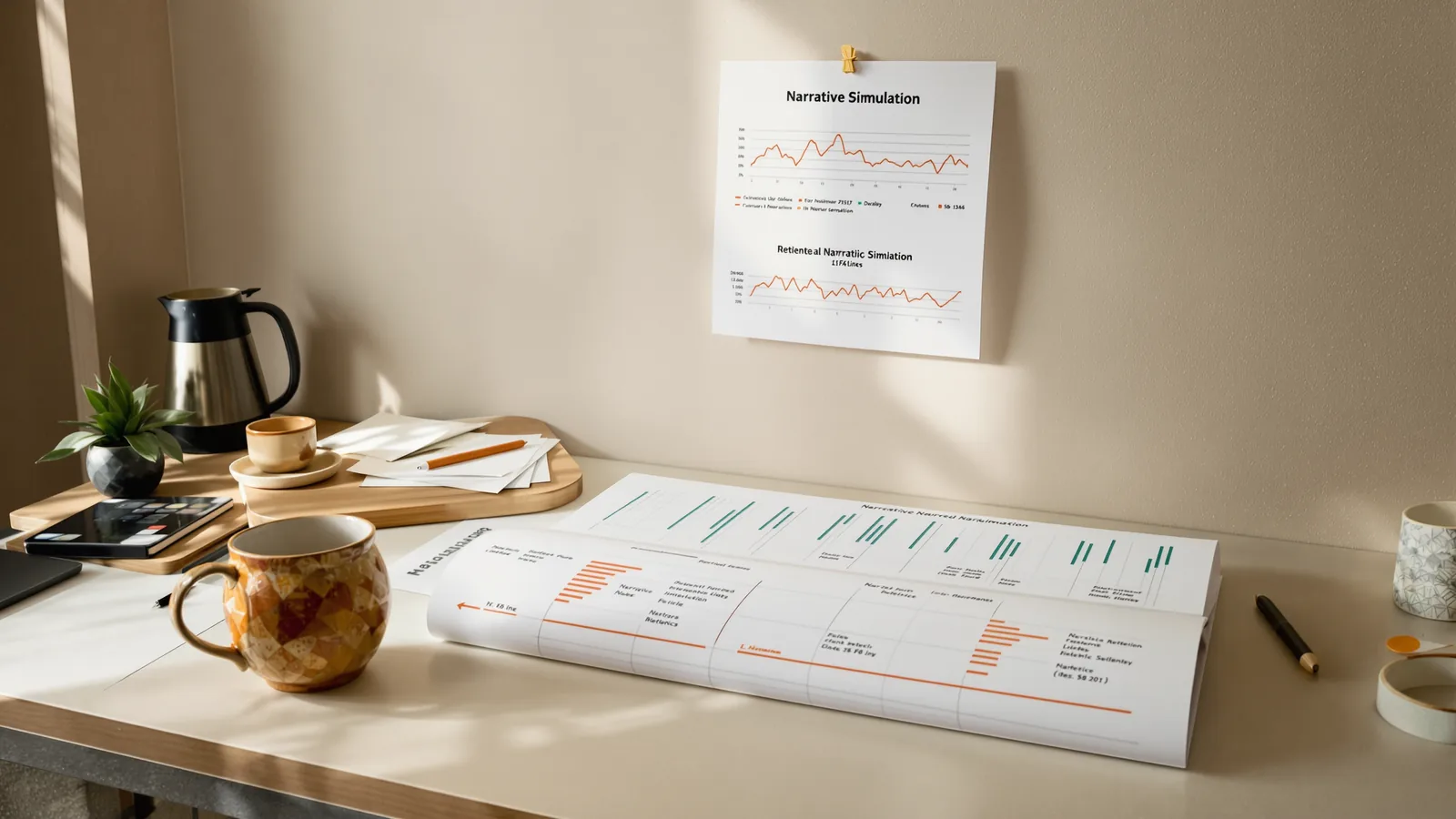
| Tool | What it simulates | How it works | Deliverable |
|---|---|---|---|
| Anxiety by Lizardi | Cross-platform narrative dynamics: how a message travels and mutates | 10,000 synthetic agents interact across 6 simulated platforms | Structured report in ~48 hours with narrative paths |
| GWI Synthetic Audiences | Synthetic-panel answers to research questions | Models built on GWI survey data | Survey-style answers instantly |
| Electric Twin | Modeled populations reacting to messages and policies | Population twins trained on opinion data | Message-response predictions |
Anxiety is the only one of the three that simulates the conversation between agents inside the platforms (replies, shares, side conversations), not isolated survey answers. Aaru (Accenture) and WPP Open Intelligence operate in the same category.
What is Anxiety?
Anxiety is Lizardi Consulting's narrative-simulation engine. It simulates how an audience would react to a message using 10,000 synthetic agents across six simulated platforms (X, Reddit, Facebook, YouTube, Instagram and group chats). It delivers a structured report in roughly 48 hours.
How is it different from a survey-style synthetic audience?
Synthetic-panel tools, such as GWI Synthetic Audiences or Electric Twin, answer questions the way a survey panel would. Anxiety simulates the social dynamics: agents read one another, share and argue, and the message mutates as it travels across the network. The result is the trajectory of the narrative, not a table of answers.
What do I get, and how fast?
You get a structured report in roughly 48 hours from your brief. It covers the dominant narrative paths, the breaking points and the likely counter-narratives, ready to present to an executive or a board.
Do the agents use real user data?
No. The 10,000 agents are synthetic: each one has its own opinion model and its own posting rhythm. Nothing is published on real platforms during the simulation.
The name is intentional. Anxiety models the overthinking that happens between agents: the second-guessing, the side-conversations, the way a message mutates as it travels through a network. Every cycle returns a structured report you can hand to an executive or to a board.