
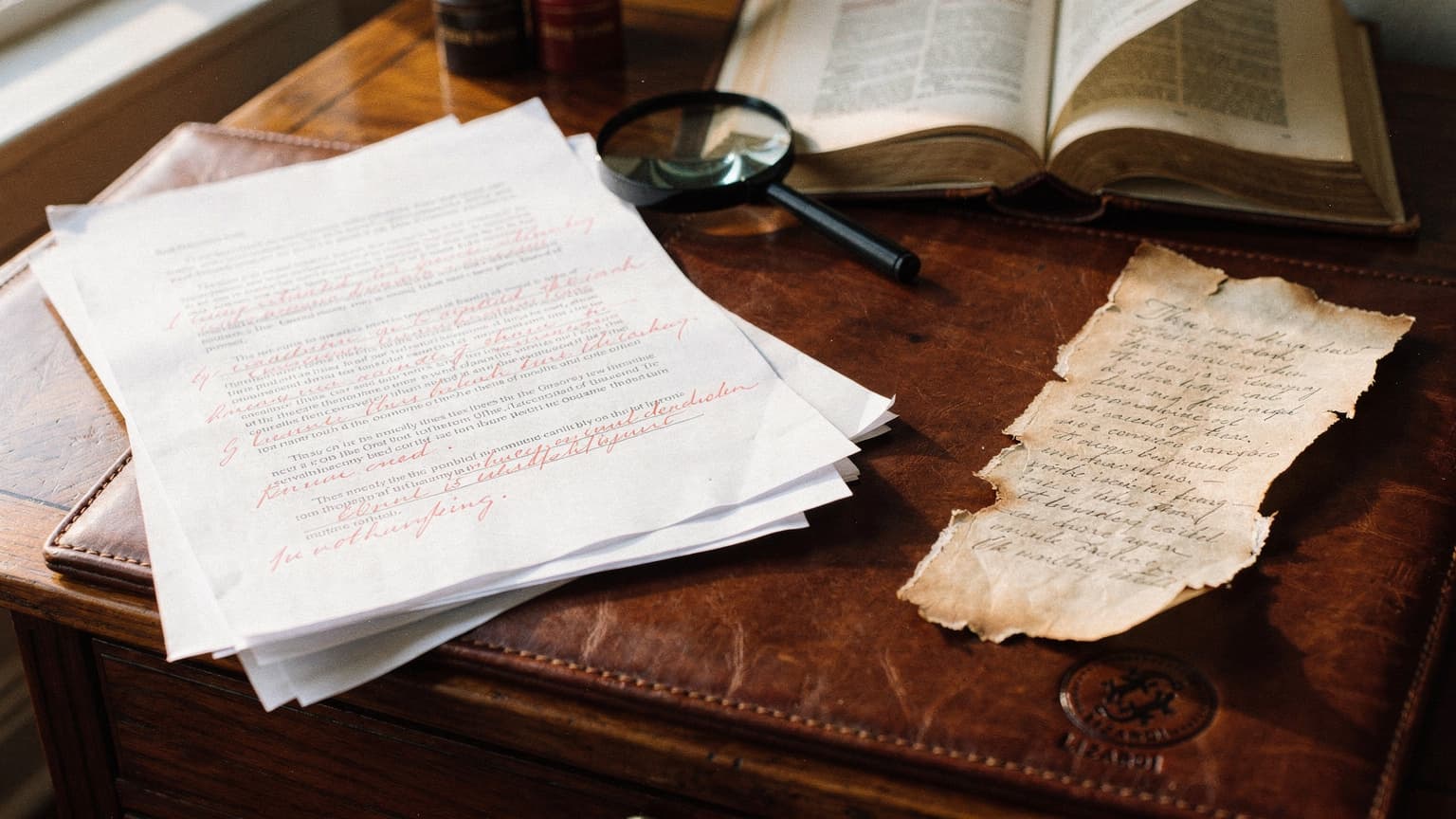
June 2023, Southern District of New York. On the 22nd, Judge Kevin Castel fined two lawyers a combined $5,000 and ordered them to notify every judge falsely cited in their brief. The filing cited six precedents that ChatGPT had invented: case names, docket numbers and internal citations that all read as legitimate. None of them existed in any case law database. The court found that the lawyers abandoned their responsibilities by relying on the tool without checking it against primary sources.
That case, Mata v. Avianca, still strikes me as the clearest portrait of what people now call AI slop: text produced at volume, optimized to sound right, with no commitment to accuracy. A Kapwing study cited by the BBC found that 20% of what a new YouTube account sees is already low-quality AI-generated video. The same thing happens with text, only it's harder to notice, because most people don't read closely enough to catch it.
How I spot text that nobody reviewed
The tells are consistent, though none is foolproof on its own. Here's how I read them:
- Predictable fluency. Models gravitate toward the most common patterns in their training data. It sounds correct and says nothing.
- Uniform rhythm. Sentences of similar length, evenly calibrated paragraphs and the same connector words opening every block.
- Thin vocabulary that keeps recycling. Low lexical diversity and repetition of high-frequency words are among the signals detectors use. Claude introduced a numeric method for measuring this just last month; it deserves its own piece.
- Templated structure. "Everything you need to know about," "Top 10 changes in." Format dictates content.
- Negative parallelism. "It's not X, it's Y," over and over, used as a crutch to fake an idea.
- Weak local grounding. Without the right tools, the model works mostly with material that isn't from Mexico: no dates, no amounts, no decree numbers, no DOF publications, no SAT or CNBV. It's also common for it to assume something read in Spanish applies to Mexico and pull in laws from Chile or elsewhere.
- Verbal certainty about sources that don't exist. The serious version. Confident tone, references that look precise, and no way to verify them.
A comparative analysis of texts from ChatGPT, Gemini and BingAI documented the same pattern quantitatively: higher grammatical correctness, standardized syntax, fewer metaphors and less emotional expressiveness than human-written text. Wordiness and the absence of a distinct voice stood out as the main differentiators. Andrew Gray estimated that at least 60,000 scientific papers published in 2023 were drafted with help from tools like ChatGPT: mass adoption, and with it, repetitive stylistic patterns at scale.
The model did what it was asked to do
Produce plausible text at the lowest possible cost. The problem starts when someone signs off on it without reading it. Final responsibility rests with the professional, and no tool relieves anyone of the duty of diligence and critical judgment. In 2025, Mexico published guidelines for the responsible use of AI in legal practice, among the first in Latin America aimed explicitly at firms and legal departments. They establish an obligation to stay current on technical competence, a duty of confidentiality and data protection, transparency in tool use, mandatory human oversight of every AI-generated output, and verification against hallucinations before using any law, precedent or figure.
The four controls that actually work
First, workflow design: AI produces drafts, and the professional decides whether to use them after validating and correcting. In practice that means a written rule: no report, contract, opinion or technical memo goes to a client without documented human review. If you don't have that document yet, start with an AI use policy that names owners and deliverables.
Second, verification against primary sources. Every reference to case law gets checked against the Semanario Judicial or official databases. Every citation to the DOF, accounting standards or tax and regulatory provisions gets verified directly at the source before it appears in a client document. In Mata v. Avianca, the nonexistent citations surfaced only when the judge went looking for them, not before.
Third, style adjustment to recover a professional voice. Review means adding the client's concrete examples, figures and proper names; adapting terms to local usage, with references to SAT, CNBV, IMSS or the applicable NOM; and cutting generic filler and repetitive structures. This is trainable: most of the slop I see at firms comes from people who never learned to use the tool beyond asking for a text and pasting it in.
Fourth, governance and auditing. The 2024 working papers from IALAB and OCEDIC recommend periodic audits of AI use, data governance frameworks with clearly defined roles, and ongoing evaluation of bias, performance and regulatory compliance. AI gets built into supervised workflows. For an accounting or financial firm, that means naming someone responsible for AI who reviews which tools are in use, what client data gets uploaded, and what quality controls apply before reports go out. Before any of that, decide which documents can go to a public service and which can't.
Three ways to lose a client
A tax firm in Mexico City drafts a memo about a recent amendment to the Income Tax Law using AI. The model hallucinates a reform that doesn't exist and cites the wrong article, but the text sounds coherent and reads well. Without review, the client makes decisions based on a wrong interpretation, and the firm is exposed to professional liability and lost trust.
An engineering firm bidding on public works asks for a draft technical proposal, and the tool recycles generic descriptions that skip the requirements of the applicable Mexican standard, NOM or public works regulations. Without manual adjustment, the proposal fails to meet technical or legal requirements, and that leads to disqualification or litigation.
A financial consultancy preparing a compliance report gets a checklist from AI based on another country's regulations, presented in neutral Spanish with no reference to CNBV or Banco de México. In front of the Mexican authority the report is irrelevant; in front of the client, it's evidence of sloppiness.
Productivity against risk
The technology is already part of professional practice. The 60,000 papers from 2023 confirm it, and for a firm the gain is real: draft contracts, preliminary opinions, reports, minutes and internal manuals come out faster and with acceptable formal correctness. On the other side there's a federal ruling that documents a fine, reputational damage and an explicit warning about abandoning professional responsibility. The linguistic studies fill out the picture: correct text that turns out generic, poorly adapted to context and, in the worst case, confidently false.
What this means for your firm in Mexico
Three decisions, and none of them is technological. AI gets used as a drafting assistant that speeds up first drafts. Internal policies and audits get written, signed and reviewed on a schedule. Expert human review is a condition for anything that goes out to a client or in front of an authority.
The fastest tell for unreviewed text is uniform rhythm: paragraphs of the same length, with no figure, no date, no proper name. When you spot that in a document with your signature on it, the problem isn't the model.
FAQ
Can AI invent case law that looks real?
Yes. In Mata v. Avianca the brief contained six nonexistent precedents, complete with docket numbers and internal citations that read as legitimate. The deception surfaced only when the judge went looking for the sources. Every reference to case law should be checked against the Semanario Judicial or official databases before signing.
What fine was imposed in the New York case?
On June 22, 2023, Judge Kevin Castel imposed a combined $5,000 fine on two lawyers and ordered them to notify every judge falsely cited.
Do Mexico's guidelines ban the use of AI in legal practice?
No. The guidelines published in 2025 require technical competence, confidentiality and data protection, transparency in tool use, mandatory human oversight of all AI-generated output, and prior verification of laws, precedents and figures.
Why does AI-generated content fail in the Mexican context?
Because most of the material the model draws on doesn't come from Mexico. Without the right tools and sources, it skips dates, amounts, decree numbers and DOF publications, and sometimes assumes that a Spanish-language text from another country applies here.